
RAD-TRACK EU: transferring know-how from space to the hospital floor
Interview with Marianthi Fragkopoulou, CEO of HERADO, on the RAD-TRACK EU project
August 18, 2026
Every year, more than four billion diagnostic imaging procedures are performed across the European Union. Behind each CT scan, PET-CT or radiotherapy session lies a number — the radiation dose the patient has received. That number is recorded in the technical depths of the hospital's radiology systems, written in a format only medical physicists and radiologists can read. For everyone else: the oncologist, the GP, the cardiologist, the patient, it might as well not exist.
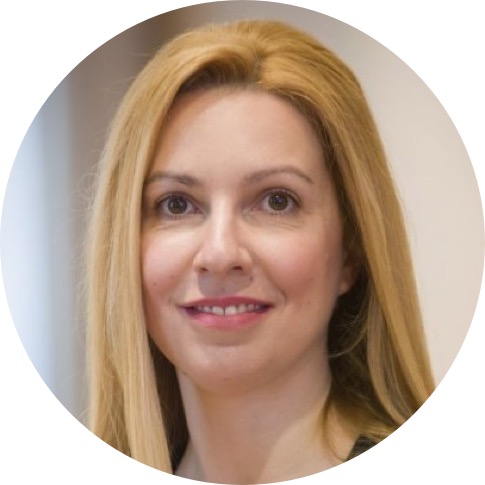 Marianthi Fragkopoulou
RAD-TRACK EU, one of the projects funded under UNITE's Open Call 1, wants to change that. Coordinated by HERADO, a Greek deep-tech SME that has already sent its dosimeters to the Moon with NASA's Artemis I mission, the project brings together clinical partners in the Netherlands (University Medical Center Groningen), Greece (Papageorgiou General Hospital) and Italy (CNAO, the National Centre for Oncological Hadrontherapy in Pavia), with Siemens EDA as associate partner. The goal is to build a vendor-neutral "Radiation Digital Passport" that turns siloed dose data into a portable, patient-centred safety record aligned with the European Health Data Space (EHDS).
Marianthi Fragkopoulou
RAD-TRACK EU, one of the projects funded under UNITE's Open Call 1, wants to change that. Coordinated by HERADO, a Greek deep-tech SME that has already sent its dosimeters to the Moon with NASA's Artemis I mission, the project brings together clinical partners in the Netherlands (University Medical Center Groningen), Greece (Papageorgiou General Hospital) and Italy (CNAO, the National Centre for Oncological Hadrontherapy in Pavia), with Siemens EDA as associate partner. The goal is to build a vendor-neutral "Radiation Digital Passport" that turns siloed dose data into a portable, patient-centred safety record aligned with the European Health Data Space (EHDS).
We spoke with Marianthi Fragkopoulou, founder and CEO of HERADO and a nuclear physicist by training, about the project's origins, what the consortium hopes to achieve in eighteen months, and why a regulation written in Brussels is changing the entire conversation around radiation protection in European hospitals.
Let's start from the beginning. Who is HERADO, and how did the company end up applying to a UNITE call on digital health?
To understand why we applied to UNITE, you need to understand where the company comes from. HERADO has its expertise in radiation protection, and our starting point was space. We are part of the Artemis programme: our ALMAR dosimeters flew to the Moon on the Artemis I mission, and we are the only company worldwide that provided active personal dosimeters for the radiation measurements on board.
What we have been doing since then is transferring that space know-how to applications on Earth, and specifically to healthcare. Our first commercial entry point was the protection of physicians — interventional cardiologists, radiologists, the people who work every day in radiation environments. That is a market where we are already present.
But the world is changing. Right now there is a new European legislation, the European Health Data Space, that is changing everything in healthcare. It is essentially mandatory: all hospitals have to make everything digital, including the radiation dose that patients receive during diagnostics and treatment. This opens a completely new space — moving from the protection of staff to the protection and tracking of patients. And there is no real-time dosimeter for medical use on the market today that can do that properly. That gap is what we want to fill, and UNITE gives us the framework to do it across European regions.
The project talks about "invisible exposure." What does that mean concretely for a patient?
Today, when you have a CT scan, the dose information is stored in the radiology system, in a technical format that only the radiology department can read. If you move to another hospital, or to another country, that information doesn't move with you. The result is that nobody has a complete picture of how much radiation you have accumulated over the course of your life — not your oncologist, not your GP, and certainly not you.
This matters because the dose you receive depends very much on personal parameters. Gender matters: the way radiation affects men and women is totally different — female breast and thyroid tissue, for example, are significantly more radiosensitive. Weight matters. Height matters. Age at exposure matters enormously, because a child has many more years ahead during which a cancer could develop. And right now, everyone is radiated in exactly the same way. The new approach in radiation protection has to go towards personalised protocols, and you cannot personalise what you cannot see.
RAD-TRACK introduces something you call the "Radiation Digital Passport." How will it work?
Up to now, because there was no data about the cumulative dose patients receive, we don't really know how this affects them over a lifetime. With RAD-TRACK, each patient will have a radiation passport: a digital record of the dose they receive throughout their life. That is already very useful information on its own.
But the real value comes when you combine that information with the other data that will be available through the European Health Data Space. Then we can move into predictive modelling — anticipating problems that may occur during the patient's lifetime. That kind of prediction is extremely important for cancer treatment, for pharmaceutical research, for personalised care in general.
There is also an AI Risk Engine in the project, which is the layer that turns the raw dose data into a personalised risk assessment. But I want to be honest about that: AI in healthcare needs a lot of data, because we are speaking about very delicate and very important issues. RAD-TRACK is a starting point. The eighteen months will allow us to build the basic core, validate it across different hospitals and different departments, and then expand from there.
The consortium covers very different clinical environments. How are the partners organised?
This is exactly the reason we built the consortium the way we did. Each clinical partner brings expertise in a different sector, so that we can collect data from different types of procedures and build standards that work across the board.
Papageorgiou General Hospital in Thessaloniki will focus more on CT and tomography. CNAO in Pavia, which is one of the world's leading centres for proton and carbon ion therapy, will focus on treatment, particularly for head and neck cancers, where they have deep expertise. University Medical Center Groningen brings the scientific validation authority and the integration with their complex clinical IT environment. And HERADO provides the real-time dosimeters and the data acquisition platform that runs across all sites. This way we will have a lot of data, from very different characteristics of patients and procedures, which is exactly what we need to build the new standards.
What is the unique selling point of HERADO compared to existing systems?
Our competitors are mainly US companies, and the issue is not only that they are US-based. It is that there is no actual real-time dosimeter on the market that is qualified for medical use. What exists today is on-demand: you measure when you want, you get the integrated dose afterwards. It's not real time. So up to now there has been no live data feed to build personalised treatment on.
We have the only real-time dosimeter in the market globally that can be used in the healthcare sector, both for physicians and for patients. It is very small — about 25 grams — so patients don't even feel it. And it can measure and separate different types of radiation simultaneously, which is critical in environments like hadrontherapy at CNAO, where you have heavy ions, protons, and secondary neutrons all in the same field.
There is also a sovereignty dimension. The US systems, because they work on-demand, need to send the data back to the United States for processing, and then send it back. This is unacceptable for Europe under the current legislation. We produce in Europe, and our entire data architecture is GDPR-compliant by design. We are speaking about European civilian technology, and that matters increasingly to hospitals and to regulators.
What are the main benefits, for you, from being part of the UNITE Project?
UNITE wants to build a community of digital health innovators across European regions, and that is exactly the logic of RAD-TRACK. The project’s decentralized consortium consists of elite healthcare and clinical research institutions.
The University Medical Center Groningen (UMCG) in the Netherlands spearheads the scientific validation and the deployment of advanced, privacy-preserving Federated Learning infrastructure. In parallel, the National Centre for Oncological Hadrontherapy (CNAO) in Italy and Papageorgiou General Hospital in Greece serve as frontline clinical pilot sites, executing real-world hospital trials to optimize radiotherapy workflows for oncology patients. In Spain, FUNDESALUD coordinates regional clinical trials in Extremadura and leads the standardization to align with the European Health Data Space (EHDS).
The other main benefit is alignment with EHDS. By the time medical imaging data must be exchangeable across borders under the EHDS — that is scheduled for 2031 — we want RAD-TRACK to be the standard middleware that makes it work for radiation. UNITE is what allows us to start building that standard now, with real clinical partners, real data, and a clear path from pilot to European-wide adoption.
We see RAD-TRACK as a starting point for putting the patient at the centre of radiation safety in Europe. Not in theory, but in practice, across borders, with the technology, the data, and the governance framework all aligned. That is the real opportunity that UNITE has given us.
The project is eighteen months long. Where do you realistically expect to be by September 2027?
When you do experiments, you can never fully anticipate what you'll find. But what we expect, concretely, is to have put down the basic core of the new standards in radiation protection and in more personalised treatment. Starting a more patient-centric era in radiation protection and making patients, especially children and pregnant women who are most anxious about radiation exposure, feel safer and more engaged.
We also want to start expanding beyond the three hospitals in the consortium. Not only to other hospitals in the same regions, but to the wider UNITE network. By the end of the project, we will at least have started communicating with the regional authorities and establishing a pipeline. I think this is something UNITE wants as well: to build a community, to create relationships between the regions. That can definitely be done in eighteen months. Full deployment everywhere is another matter; that will come at a later stage.
RAD-TRACK EU is funded under the UNITE Open Call 1, part of the Regional Innovation Valleys initiative under the New European Innovation Agenda. The consortium is coordinated by HERADO (Greece) and includes University Medical Center Groningen (Netherlands), Papageorgiou General Hospital (Greece), and CNAO – National Centre for Oncological Hadrontherapy (Italy), with Siemens EDA as associate partner. The project runs from April 2026 to September 2027.
